
5 – Day Trekk Kilimanjaro Marangu Route
Compared to many other mountains, Mount Kilimanjaro is considered one of the more accessible high peaks to climb. You don’t need advanced mountaineering skills—just determination, preparation, and a reasonable level of fitness. Climbers as young as seven and as old as eighty-nine have successfully reached the summit. With the guidance and support of our experienced mountain crew, you’ll have every advantage to conquer this incredible challenge safely. Standing at the “Roof of Africa,” you’ll witness breathtaking views stretching across vast landscapes—a truly unforgettable experience and a personal triumph that proves adventure and achievement know no age limits.
5 Days | 4 Nights
Tanzania
Kilimanjaro Trekk
Day 1; Arusha -Marangu Gate to Mandara Hut
You’ll depart from Arusha to Marangu gate, complete all the required formalities before you begin our trek through the beautiful thick forest that clothes the lower reaches of Kilimanjaro.
Hiking for 4 to 5 hours, you will spot wildlife such as the blue colobus monkey and a variety of bird species along the way
You will spend a night at Mandara Hut, which provides you with luxuries such as solar lighting and flush latrines. Maundi Crater is a good way to see the surroundings, including Northern Tanzania and Kenya
On your way to the top, our professional guide named John will brief you about the history of Kilimanjaro, types of vegetation, and much more as you climb to the summit.
Day 2; Mandara Hut to Horombo Hut
You will wake up early today, as you have a big day of trekking ahead of you! We begin our day through the forest until the trails open up to the start alpine zone.
If the weather is clear, you will get a glimpse of Kibo and Mawenzi-two of the three volcanic peaks that make up the summit of Kilimanjaro Mountain. Your dinner and overnight stay are at Horombo Hut.
Day 3; Horombo Hut to Kibo Hut
It’s another big day of trekking, as you will make your way to Kibo hut and rest for the night ahead of your attempt to summit the roof of Africa. Climbing almost 4,130 meters, you will arrive at Kibo Hut in the evening.
Make sure you drink a lot of water during dinner, as you will be up bright and early tomorrow to start your quest to the summit. Dinner, rest, and prepare for the summit climb.
Day 4; Kibo Hut- Uhuru Peak to Horombo Hut
Just after midnight our professional guides will wake you up with a cup of tea and a light meal for energy as you dress and get ready for the adventure ahead.
You will be hiking in pitch darkness for 5 to six hours, so take it easy and you will make it to Stella Point a few hours before sunrise. From here, there will be an additional two hours of extreme hiking before you achieve your ultimate objective: Uhuru Peak.
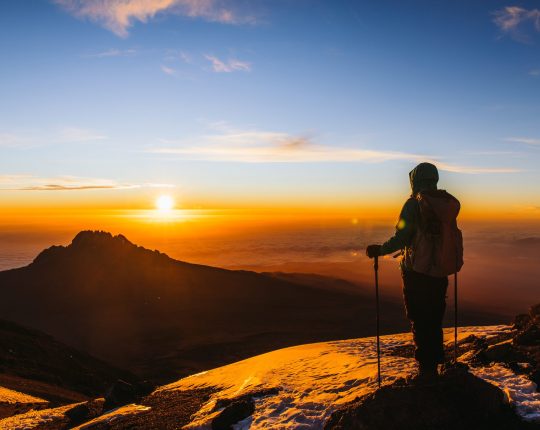
Standing at 5985 meters, you will be able to experience an amazing sunrise and be absorbed in a spectacular panoramic view. Congratulations, you have made it to the roof of Africa.
You will now climb back down to Horombo Hut via Kibo Hut. This is due to be one of the longest, most tiring days of your life.
Day 5; Horombo Hut to Marangu Gate to Arusha
Today is a day of joy, as you enjoy your last breakfast on the Mountain before climbing down to Marangu Gate. It’s almost 19 19-kilometer walk down to Marangu Gate, but it will be a lot easier compared to climbing up the mountain.
Upon arrival at the gate, you will have an opportunity to celebrate with your guides, potters, and the cook for their hard work and offer them tips.
Later on collect your certificate of completion. Your driver will drive you back to your hotel in Arusha/Moshi for a good well-deserved rest.
Trekk Includes
- Kilimanjaro park fees
- Professional experienced mountain guides, cook and porters
- Rescue fees
- All accommodation in tents on the mountain
- All meals while on the mountain
- Guides, porters, cook park fees
- Clean and purified drinking water
- Transfers from Arusha or Moshi to Kilimanjaro National Park and back as described in the itinerary
Trekk Excludes
- Flights
- Optional activities
- Visa fees
- Alcoholic and soft drinks
- Travel insurance
- Tips to mountain Crews
- Personal gears like sleeping bags, Hiking poles etc.
- Personal spending money for souvenirs etc


Real stories from our travelers
Favour Expeditions planned our Tanzania safari perfectly! Knowledgeable guides, stunning wildlife, and seamless organization made it an unforgettable adventure. Highly recommended!
The team at Favour Expeditions was amazing—professional, friendly, and attentive. They ensured every detail of our trip exceeded expectations.
Thanks to Favour Expeditions, we conquered Kilimanjaro safely! Excellent guides, great food, and constant support throughout our incredible mountain journey.
Our family safari with Favour Expeditions was magical! Beautiful lodges, great food, and fun activities for kids. Truly unforgettable memories.
From booking to the final day, Favour Expeditions provided clear communication, top service, and wonderful hospitality. Everything ran smoothly!
FAQ About Mount Kilimanjaro
Where is Mount Kilimanjaro located?
Mount Kilimanjaro is located in northern Tanzania, near the border with Kenya. It lies within Kilimanjaro National Park, a UNESCO World Heritage Site known for its diverse wildlife and stunning landscapes.
How high is Mount Kilimanjaro?
Mount Kilimanjaro stands at 5,895 meters (19,341 feet) above sea level, making it the tallest mountain in Africa and the world’s highest free-standing mountain.
Do I need climbing experience to summit Kilimanjaro?
No prior climbing experience is required. Kilimanjaro is a trekking mountain rather than a technical climb, but good physical fitness, determination, and proper acclimatization are essential.
What are the best routes to climb Kilimanjaro?
Popular routes include the Machame, Lemosho, Marangu, Rongai, and Umbwe routes. The Lemosho and Machame routes are favored for their scenic beauty and higher success rates.
When is the best time to climb Kilimanjaro?
The best times to climb are during the dry seasons: January to March and June to October. These months offer clear skies, great visibility, and stable weather conditions.
What should I pack for the climb?
Essential items include layered clothing, sturdy hiking boots, a warm sleeping bag, rain gear, sunscreen, water bottles, and a good camera to capture the breathtaking views.
How difficult is it to climb Kilimanjaro?
While not technically difficult, the main challenge is altitude. Proper pacing, hydration, and acclimatization are key to avoiding altitude sickness and reaching the summit successfully.
Do I need a guide to climb Kilimanjaro?
Yes, all climbers must be accompanied by a registered guide and support crew as required by Tanzanian park authorities. They ensure your safety and enhance your experience.

