
6-Day Kilimanjaro Machame Route
Experience on an unforgettable 6-day Kilimanjaro adventure along the Machame Route, famously known as the “Whiskey Route” for its exhilarating blend of beauty and challenge. Renowned as one of the most scenic paths to the summit, this route takes you through lush rainforests, sweeping moorlands, and dramatic alpine deserts, offering a visual feast of ever-changing landscapes. As you ascend, you’ll be rewarded with breathtaking panoramic views of Kilimanjaro’s volcanic peaks and the vast plains below. The Machame Route is perfect for adventurous trekkers seeking a diverse and rewarding climb, balancing physical challenge with unmatched natural beauty. With experienced guides leading the way, every step brings new sights and a deeper connection to the mountain’s wild spirit. The journey culminates at Uhuru Peak (5,895m) — the roof of Africa, where triumph meets tranquility and the breathtaking sunrise marks a truly life-changing accomplishment.
6 Days | 5 Nights
Tanzania
Kilimanjaro Trekk
Day 1; Machame Gate (1800 m) to Machame Camp (2835 m)
After breakfast, you will be collected from your hotel around 8:00 am and transferred to Machame Gate. En route, you will pass coffee and banana plantations cultivated by the Chagga people, representing the mountain’s first of five ecological zones. Upon arrival at the gate, Trans Kibo will assist with all pre-hike formalities and registration. The climb begins through dense tropical rainforest, gradually ascending to Machame Camp at 2,835 metres. Keep an eye out for blue monkeys in the treetops along the trail. A picnic lunch is enjoyed on the way before reaching camp, where you will spend your first night under the guidance and support of your experienced mountain team.
Day 2; Machame Camp (2835 m) to Shira Cave Camp (3750 m)
Rise early to catch your first breathtaking view of Mount Kilimanjaro before a hearty breakfast. The trek begins around 8:00 am, climbing steadily through the forest for about an hour before emerging onto the gentler slopes of the moorland zone. After a short lunch and rest, the trail continues along a rocky ridge leading to the Shira Plateau. From here, you can admire the impressive Western Breach and its striking glacier. The day concludes with an overnight stay at Shira Campsite at 3,750 metres, allowing time to rest and acclimatise in this unique alpine environment.
Day 3; Shira Cave Camp (3750 m) to Baranco Camp (3900 m)
To aid acclimatisation, today’s trek involves ascending to a higher altitude before descending back to camp for the night. You will climb through the alpine desert to reach Lava Tower at 4,600 metres, taking in the dramatic high-altitude landscapes along the way. After spending time at the tower, the trail descends for approximately three hours to Baranco Camp at 3,900 metres. Along the descent, there are excellent opportunities to photograph the striking Western Breach and the towering Baranco Wall. Baranco Camp lies in a valley beneath the Baranco Wall, offering a spectacular sunset to enjoy before dinner and a restful night in your tent.
Day 4; Barranco Camp (3900 m) to Barafu Camp (4640 m)
Today’s trek begins at Baranco Camp, renowned for its giant groundsels and unique alpine flora. The main challenge of the day is ascending the impressive Barranco Wall, which separates you from the southern slopes of Kibo. While not technically difficult, the climb is long and physically demanding. Upon reaching Karanga Camp, you will have lunch, and the staff will collect water for the following day, as this is the last reliable water source before the summit. The trail then continues through the stark alpine desert, gradually leading to Barafu Camp (Base Camp) at 4,640 metres, where you will rest and prepare for the final push to the summit.
Day 5; Barafu to Uhuru Peak (5895m) to Millennium Camp (3950 m)
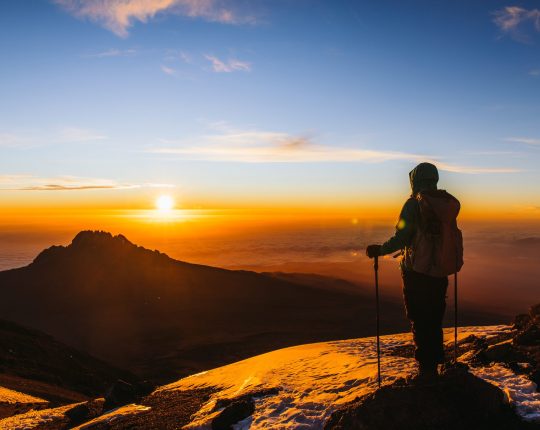
The day begins at midnight with a light tea and breakfast to fuel your final ascent. The climb to the summit is a steep 4 to 5-hour trek, gaining significant altitude over a short distance. As the sun rises, the views are truly breathtaking. You will reach Stella Point (5,756 m) on the crater rim at sunrise, before continuing for approximately one hour to Uhuru Peak (5,895 m), the highest point in Africa. Take time to celebrate your incredible achievement and capture photographs to share with friends and family. After soaking in the views, the descent begins to Barafu Camp for lunch and rest, followed by a continued descent to Millennium Camp (3,950 m) for dinner and a well-earned night of rest.
Day 6; Millennium Camp (3950m) to Mweka Gate (1630m)
After breakfast, the final descent begins, taking a couple of hours from Millennium Camp to Mweka Gate. Here, you will collect your summit certificates and enjoy a refreshing cold beverage to celebrate your achievement. After farewells to your mountain guides, a private transfer will take you back to your hotel, where a long-awaited warm shower awaits. This is the perfect time to relax, reflect on your incredible journey, and celebrate conquering Mount Kilimanjaro.
Trekk Includes
- Kilimanjaro park fees
- Professional experienced mountain guides, cook and porters
- Rescue fees
- All accommodation in tents on the mountain
- All meals while on the mountain
- Guides, porters, cook park fees
- Clean and purified drinking water
- Transfers from Arusha or Moshi to Kilimanjaro National Park and back as described in the itinerary
Trekk Excludes
- Flights
- Optional activities
- Visa fees
- Alcoholic and soft drinks
- Travel insurance
- Tips to mountain Crews
- Personal gears like sleeping bags, Hiking poles etc.
- Personal spending money for souvenirs etc


Real stories from our travelers
Favour Expeditions planned our Tanzania safari perfectly! Knowledgeable guides, stunning wildlife, and seamless organization made it an unforgettable adventure. Highly recommended!
The team at Favour Expeditions was amazing—professional, friendly, and attentive. They ensured every detail of our trip exceeded expectations.
Thanks to Favour Expeditions, we conquered Kilimanjaro safely! Excellent guides, great food, and constant support throughout our incredible mountain journey.
Our family safari with Favour Expeditions was magical! Beautiful lodges, great food, and fun activities for kids. Truly unforgettable memories.
From booking to the final day, Favour Expeditions provided clear communication, top service, and wonderful hospitality. Everything ran smoothly!
FAQ About Mount Kilimanjaro
Where is Mount Kilimanjaro located?
Mount Kilimanjaro is located in northern Tanzania, near the border with Kenya. It lies within Kilimanjaro National Park, a UNESCO World Heritage Site known for its diverse wildlife and stunning landscapes.
How high is Mount Kilimanjaro?
Mount Kilimanjaro stands at 5,895 meters (19,341 feet) above sea level, making it the tallest mountain in Africa and the world’s highest free-standing mountain.
Do I need climbing experience to summit Kilimanjaro?
No prior climbing experience is required. Kilimanjaro is a trekking mountain rather than a technical climb, but good physical fitness, determination, and proper acclimatization are essential.
What are the best routes to climb Kilimanjaro?
Popular routes include the Machame, Lemosho, Marangu, Rongai, and Umbwe routes. The Lemosho and Machame routes are favored for their scenic beauty and higher success rates.
When is the best time to climb Kilimanjaro?
The best times to climb are during the dry seasons: January to March and June to October. These months offer clear skies, great visibility, and stable weather conditions.
What should I pack for the climb?
Essential items include layered clothing, sturdy hiking boots, a warm sleeping bag, rain gear, sunscreen, water bottles, and a good camera to capture the breathtaking views.
How difficult is it to climb Kilimanjaro?
While not technically difficult, the main challenge is altitude. Proper pacing, hydration, and acclimatization are key to avoiding altitude sickness and reaching the summit successfully.
Do I need a guide to climb Kilimanjaro?
Yes, all climbers must be accompanied by a registered guide and support crew as required by Tanzanian park authorities. They ensure your safety and enhance your experience.

