
7 Day Climb – Lemosho Route
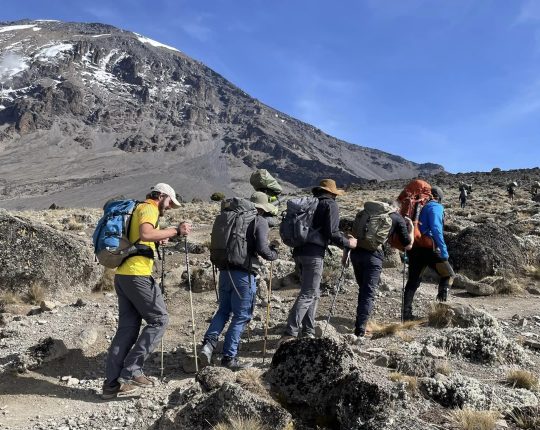
The 7-Day Lemosho Route is one of the most scenic and rewarding trails on Mount Kilimanjaro, beginning on the remote western slopes. This route offers stunning views, diverse landscapes, and an excellent opportunity for acclimatization. The first two days traverse lush rainforests and moorlands before merging with the Machame Route near Shira Plateau. From there, trekkers journey across alpine deserts and rugged ridges toward the summit of Uhuru Peak. Accommodation is provided in quality mountain tents, offering an authentic adventure experience. The Lemosho Route is best suited for physically fit hikers seeking both challenge and beauty. Climbs depart every second Friday, except during the rainy season (April, May, and June), ensuring the best trekking conditions.
7 Days | 6 Nights
Tanzania
Kilimanjaro Trekk
Day 1; Kilimanjaro Airport – Arusha
Upon your arrival at Kilimanjaro Airport, you will be greeted by our transfer driver and taken to the Meru View Lodge. The rest of the day will be at leisure and you may choose to relax at the lodge or perhaps explore the town of Arusha (taxi required). In the evening, you will attend a briefing in preparation of your upcoming trek. Dinner and overnight at Meru View Lodge.
Day 2; Arusha – Lemosho Gate (2385m) – Big Tree Camp (2780m)
In the morning, you will be picked up at the lodge and taken to the Lemosho Gate (2385m). Here you will be registered by the national park authorities and your trek through a dense rainforest begins. You will follow a moderately steep track, which leads you through an amazing and unspoilt natural forest to the Big Tree Camp, your destination for today.
Day 3; Big Tree Camp (2780m) – Shira Camp 2 (3900m)
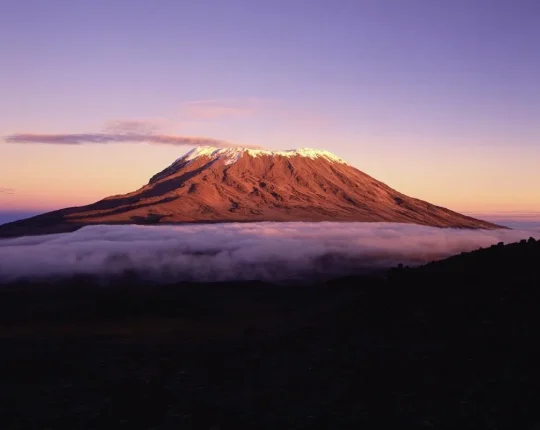
Today’s long trek starts on a small trail that passes through the rainforest. As one climbs, the forest gradually thins out and the landscape changes into heath and moorland where plants like erica and lobelia start to dominate the landscape. You will cross the Shira Ridge and after 4 to 5 hours of trekking, you will reach the Shira Camp 1. Here you will stop for lunch, relax a bit and enjoy the fantastic views of Mount Meru and the Rift Valley. For the last part of the climb (approximately 3 hours), you will climb another 250 metres in altitude. The landscape will change again, and you will walk on ground that once was a lava flow. Just before reaching Shira Camp 2, you will pass giant senecios that can grow to almost 9 metres in height. At Shira Camp 2, you will camp for the night and with a little luck, enjoy the wonderful view of the Kibo summit at sunset.
Day 4; Shira Camp 2 (3900m) – Lava Tower (4640m) – Barranco Camp (3960m)
Today you will climb approximately 700 metres, but you will spend the night at an elevation only slightly higher than the previous night. This will allow your body to acclimatise, as a height of over 4500 metres will be reached before descending again. In doing so, you will be able to see how your body reacts to such an altitude. The trek begins with a long ascent above the Shira Plateau in the direction of the Lava Tower. The vegetation becomes sparser as the landscape changes to alpine desert. The climb passes through the wide Barranco Valley with its lobelia and giant senecio plants. After 6 to 7 hours’ walking, you will arrive at the Barranco Camp – perhaps the most beautiful camp on Kilimanjaro.
Day 5; Barranco Camp (3960m) – Karanga Camp (4035m)
Today’s trekking leg has many ascents and descents and shortly after the start, you will tackle the steepest part of the entire route: the Barranco Wall. Every now and then, you may need your hands to hold on as there are no climbing “paths”. Safety is paramount, and your guides will assist you whenever necessary. After reaching the top of Barranco Wall, you will walk along the mountain ridge. From here you will have fantastic views of the southern glacier of Kibo as well as of the Kibo summit. You will get to Karanga Camp around lunch time.
Day 6; Karanga Camp (4035m) – Barafu Camp (4640m)
After breakfast you will walk along a trail that passes through an alpine desert area until you reach the destination of today – the Barafu Camp. In the afternoon you can relax and stretch your legs in preparation of the upcoming summit night. You will have dinner early in order to catch a few hours’ sleep, before you will be woken up at around midnight.
Day 7; Barafu Camp (4640m) – Uhuru Peak (5895m) – Mweka Camp (3080m)
After some hot tea and a light snack, the climb begins around midnight. By torchlight you will start walking on the lava ash that is still frozen. After 5 to 7 hours you will arrive at Stella Point (5730m), the crater rim of Mount Kilimanjaro. Another 1 to 2 hours climb along the crater ridge will lead you to the summit of Uhuru Peak. From “Africa’s Roof”, you will be able to see the surrounding landscape being lit up by the rising sun – a truly liberating experience. After a short break and taking photos, you will return to Barafu Camp just before midday where the rest of the crew will be waiting for you. You will have a warm lunch and rest for about 1 to 2 hours before you make our way down to the Mweka Camp about 3 hours away.
Day 8; Mweka Camp (3080m) – Mweka Gate (1630m) – Arusha
The final leg of your amazing adventure along the Lemosho Route in 7 days begins after breakfast with a traditional farewell ceremony from the mountain crew. Then a gentle 2 to 3 hours’ descent through the rainforest continues to Mweka Gate, where your driver will be waiting for you. He will take you back to the Meru View Lodge and after a warm shower, the rest of the day is free to rest or to celebrate your achievement.
Day 9; Arusha – Kilimanjaro Airport
After breakfast, you will be transferred to Kilimanjaro Airport. Alternatively, you can extend your trip in Tanzania and go on safari or relax at the Indian Ocean.
Trekk Includes
- Kilimanjaro park fees
- Professional experienced mountain guides, cook and porters
- Rescue fees
- All accommodation in tents on the mountain
- All meals while on the mountain
- Guides, porters, cook park fees
- Clean and purified drinking water
- Transfers from Arusha or Moshi to Kilimanjaro National Park and back as described in the itinerary
Trekk Excludes
- Flights
- Optional activities
- Visa fees
- Alcoholic and soft drinks
- Travel insurance
- Tips to mountain Crews
- Personal gears like sleeping bags, Hiking poles etc.
- Personal spending money for souvenirs etc

Real stories from our travelers
Favour Expeditions planned our Tanzania safari perfectly! Knowledgeable guides, stunning wildlife, and seamless organization made it an unforgettable adventure. Highly recommended!
The team at Favour Expeditions was amazing—professional, friendly, and attentive. They ensured every detail of our trip exceeded expectations.
Thanks to Favour Expeditions, we conquered Kilimanjaro safely! Excellent guides, great food, and constant support throughout our incredible mountain journey.
Our family safari with Favour Expeditions was magical! Beautiful lodges, great food, and fun activities for kids. Truly unforgettable memories.
From booking to the final day, Favour Expeditions provided clear communication, top service, and wonderful hospitality. Everything ran smoothly!
FAQ About Mount Kilimanjaro
Where is Mount Kilimanjaro located?
Mount Kilimanjaro is located in northern Tanzania, near the border with Kenya. It lies within Kilimanjaro National Park, a UNESCO World Heritage Site known for its diverse wildlife and stunning landscapes.
How high is Mount Kilimanjaro?
Mount Kilimanjaro stands at 5,895 meters (19,341 feet) above sea level, making it the tallest mountain in Africa and the world’s highest free-standing mountain.
Do I need climbing experience to summit Kilimanjaro?
No prior climbing experience is required. Kilimanjaro is a trekking mountain rather than a technical climb, but good physical fitness, determination, and proper acclimatization are essential.
What are the best routes to climb Kilimanjaro?
Popular routes include the Machame, Lemosho, Marangu, Rongai, and Umbwe routes. The Lemosho and Machame routes are favored for their scenic beauty and higher success rates.
When is the best time to climb Kilimanjaro?
The best times to climb are during the dry seasons: January to March and June to October. These months offer clear skies, great visibility, and stable weather conditions.
What should I pack for the climb?
Essential items include layered clothing, sturdy hiking boots, a warm sleeping bag, rain gear, sunscreen, water bottles, and a good camera to capture the breathtaking views.
How difficult is it to climb Kilimanjaro?
While not technically difficult, the main challenge is altitude. Proper pacing, hydration, and acclimatization are key to avoiding altitude sickness and reaching the summit successfully.
Do I need a guide to climb Kilimanjaro?
Yes, all climbers must be accompanied by a registered guide and support crew as required by Tanzanian park authorities. They ensure your safety and enhance your experience.

